

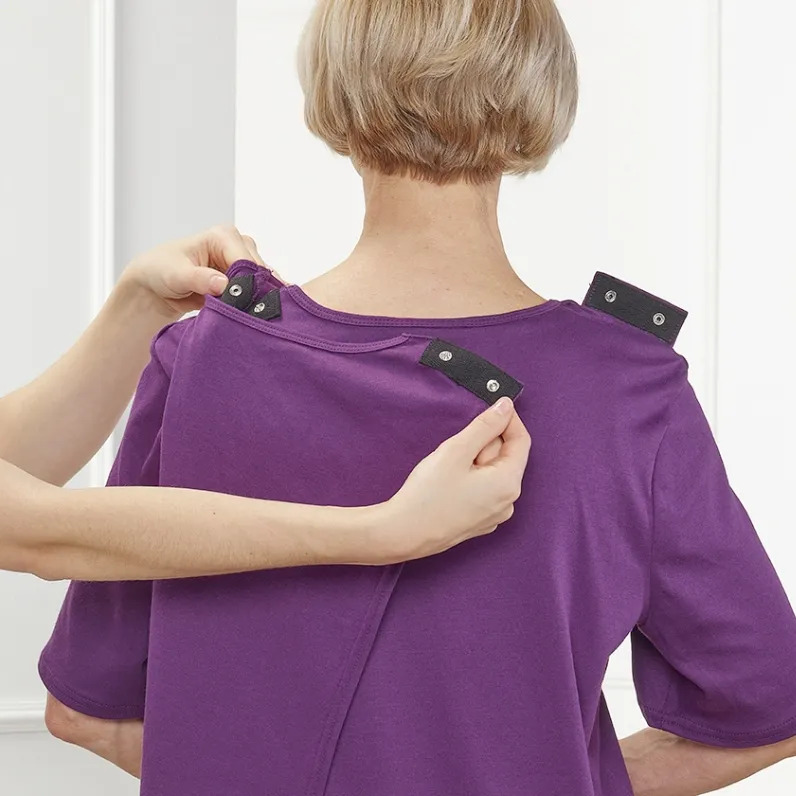
Getting dressed seems like a regular, easy task to complete every day, until it causes physical exhaustion. Women currently living with limited mobility, chronic pain, arthritis, an injury, or undergoing post-surgical recovery know how difficult it is to get dressed on their own.
Beyond physical discomfort, the impact is also psychological. Every woman wants to live confidently with dignity & independence, something regular clothing doesn’t allow. This is precisely why ladieswear tops with open back designs are gaining importance for women with mobility challenges.
Sparing the trouble of overhead movements or restrictive fabrics, open back clothing maximizes comfort without compromising personal style or modesty. So, whether you’re a woman in similar shoes or the primary caregiver for one, here’s all you should know about this practical clothing solution.
Understanding Mobility Challenges in Daily Dressing
Wearing a regular top is physically demanding for women living with mobility limitations. The simplest of actions, like pulling the top overhead, pulling tight sleeves into place, or fastening buttons, can easily trigger pain, stiffness, & agonizing muscle strain within seconds.
It’s not just about how the wrong piece of clothing affects women; it also increases the risk of falls. Once you see the depth of struggles, it’s easier to see how adaptive clothing adds value to the lives of women dealing with arthritis, shoulder pain, or balance issues.
What Is Open Back Adaptive Clothing?
Open back clothing is a specialized garment design that aims to support women struggling with mobility limitations. It provides them with an ergonomic advantage that prevents movements like pulling garments overhead or fastening complicated buttons.
Featuring convenient closures of either snaps, Velcro, or simple buttons, the adaptive clothing variety of ladieswear tops effectively helps minimize strain during dressing routines. Not just that, it creates significant ease for seated self-dressing or caregiver-assisted dressing.
4 Key Benefits of Open Back Clothing for Women with Mobility Challenges
Adaptive clothing does more than just simplify dressing. It helps women maintain their comfort while fostering independence & avoiding unnecessary physical strain or discomfort during everyday routines. For this reason, small changes in clothing designs go a long way for them.
1. Easier Dressing and Undressing
Traditional clothing designs demand movements that are unsuitable for individuals struggling with mobility issues. Such movements involve: reaching overhead or adjusting tight sleeves. If not addressed early on, it creates difficulty in dressing & puts one in a vulnerable position. Here’s what adaptive clothing does it better:
- Eliminates the need to uncomfortably pull garments overhead.
- Reduces strain on stiff shoulders, arms, & neck muscles.
- Quickens dressing routines & limits physical exhaustion.
2. More Comfort for Wheelchair Users
Women using wheelchairs due to physical limitations spend long hours in seated positions which means the clothing design has to provide comfort. This indicates that tight fabrics, bunching material, and restrictive seams are out of the question. Here’s what makes adaptive clothing a practical solution:
- Prevents fabric bunching while being seated for prolonged periods.
- Allows easier clothing adjustments without increasing twisting movements.
- Reduces discomfort caused by restrictive & tight-fitting clothes.
3. Greater Independence and Confidence
Needing assistance for something as personal as changing in & out of clothes causes a significant blow to a woman’s emotional well-being. This is precisely why many prefer to get dressed independently while maintaining privacy without being a ‘burden’. Open back clothing is a game-changer as it:
- Helps women regain control over personal dressing routines.
- Preserves dignity without requiring constant physical assistance.
- Encourages women to feel comfy, confident, and good about themselves.
4. Safer and More Practical for Caregivers
Dressing assistance can be demanding for caregivers if they stick to regular clothing items. It is primarily due to actions such as lifting arms, twisting the body, or managing difficult fasteners that add to the strain on caregivers and women with mobility issues. But when you trust adaptive clothing designs, things get better. Here’s how:
- Simplifies assisted dressing with accessible back closures.
- Reduces accidental lifting, pulling, or other painful body movements.
- Helps minimize the physical strain involved in caregiving routines.
Who Can Benefit Most from Open Back Clothing
Mobility challenges aren’t the same for every woman. Some struggle to move their torso freely, while others silently fight with dexterity problems. If not that, there’s stiffness, tremors, or balance-related difficulties that compromise comfort & safety. Fortunately, open-back adaptive clothing like tops for ladies creates great ease for many women. Here’s how (in light of the women it helps):
- Women Recovering from Stroke or Surgery: Reduces the need for lifting arms & simplifies dressing during physical recovery.
- Seniors with Arthritis or Joint Pain: Helps minimize stiffness-related discomfort caused by buttons, tight sleeves, and restricted movements.
- Women Living with Parkinson’s or MS: Incorporates convenient closures to make dressing easier for women with tremors, weakness, or reduced balance.
- Wheelchair Users and Assisted Living Residents: Minimizes fabric bunching to simply self-dressing or caregiver-assisted dressing.
How Adaptive Fashion Is Changing Women’s Clothing in Canada
For the longest time, adaptive clothing was limited to functional designs that tended to ignore personal style. But as always, things change & betterment comes. The growing awareness around mobility challenges is gradually influencing Canadian fashion brands to design clothing that feels fashionable yet remains functional.
In 2026, adaptive fashion focuses on empowering women instead of making them compromise on personal expression. From the stylish designs of creative ladieswear collections to dignity-focused open back ones, adaptive clothing lines foster the perfect balance between function, style, & confidence.
Tips for Caregivers Choosing Clothing for Women with Limited Mobility
If you’re a caregiver for women living with mobility issues, there are a few things you need to know about. Regular clothing won’t do for you what adaptive clothing can do. So, it’s important to make wiser decisions when balancing comfort, practicality, and a loved one’s emotional well-being.
- Prioritize Comfort and Accessibility: Go for soft fabrics, open back designs, and simple closures (snaps/Velcro) to reduce lifting & pulling movements.
- Consider Daily Care Routines: Buy what aligns with the frequency that assistance is needed, which includes duration of changing, along with the nature of changing (seated).
- Choose Clothing That Preserves Dignity and Style: Always a worthy decision to choose what looks like regular fashion to promote emotional & mental well-being.
Explore Adaptive Ladieswear Tops Designed for Comfort & Easy Dressing!
Everyone deserves to look good & feel even better. So, when it comes to women living with mobility limitations, a medical dressing design simply doesn’t cut it. For this reason, adaptive clothing designs for fashionable tops for ladieswear are slowly gaining popularity & recognition.
Without the need to compromise on personal expression, this shift is encouraging clothing that feels normal, looks stylish, and still provides comfort to women. Slowly but surely, this change is redefining how comfort, confidence, and accessibility are understood in everyday wear. Key takeaways before you go:
- Dressing is easier without painful overhead movements and/or strain.
- Routines can be adjusted according to self-dressing and caregiver-assisted help.
- Comfort-focused design blends with everyday wearable fashion.
At Kayden Design Adaptive Clothing, our team works to address mobility challenges by designing pieces that feel like home to your body.
Frequently Asked Questions (FAQs)
Q1. Which type of clothing is recommended for individuals with mobility issues?
Individuals living with mobility limitations are recommended to use clothing items that minimize the physical strain on the body & simplify dressing for them. It involves open back adaptive wear, made with soft stretch fabrics & snap or Velcro closures.
Q2. How to dress a client with mobility issues?
You may begin dressing a client or a loved one (as a caregiver) by helping them sit somewhere to reduce the risk of falls. Use adaptive, open back tops to support their limbs & slowly proceed to have them get fully dressed.
Q3. Who needs adaptive clothing?
Individuals struggling with conditions or issues of arthritis, stroke recovery, Parkinson’s disease, MS, chronic pain, or limited shoulder/arm mobility can benefit the most from adaptive clothing — along with seniors & wheelchair-bound people.
Q4. How do disabled people change clothes?
Individuals living with disability that restricts their movement either go for a caregiver-assisted approach or decide on doing 70% of the changing independently. Adaptive clothing designs significantly help make the process easier for them.



