

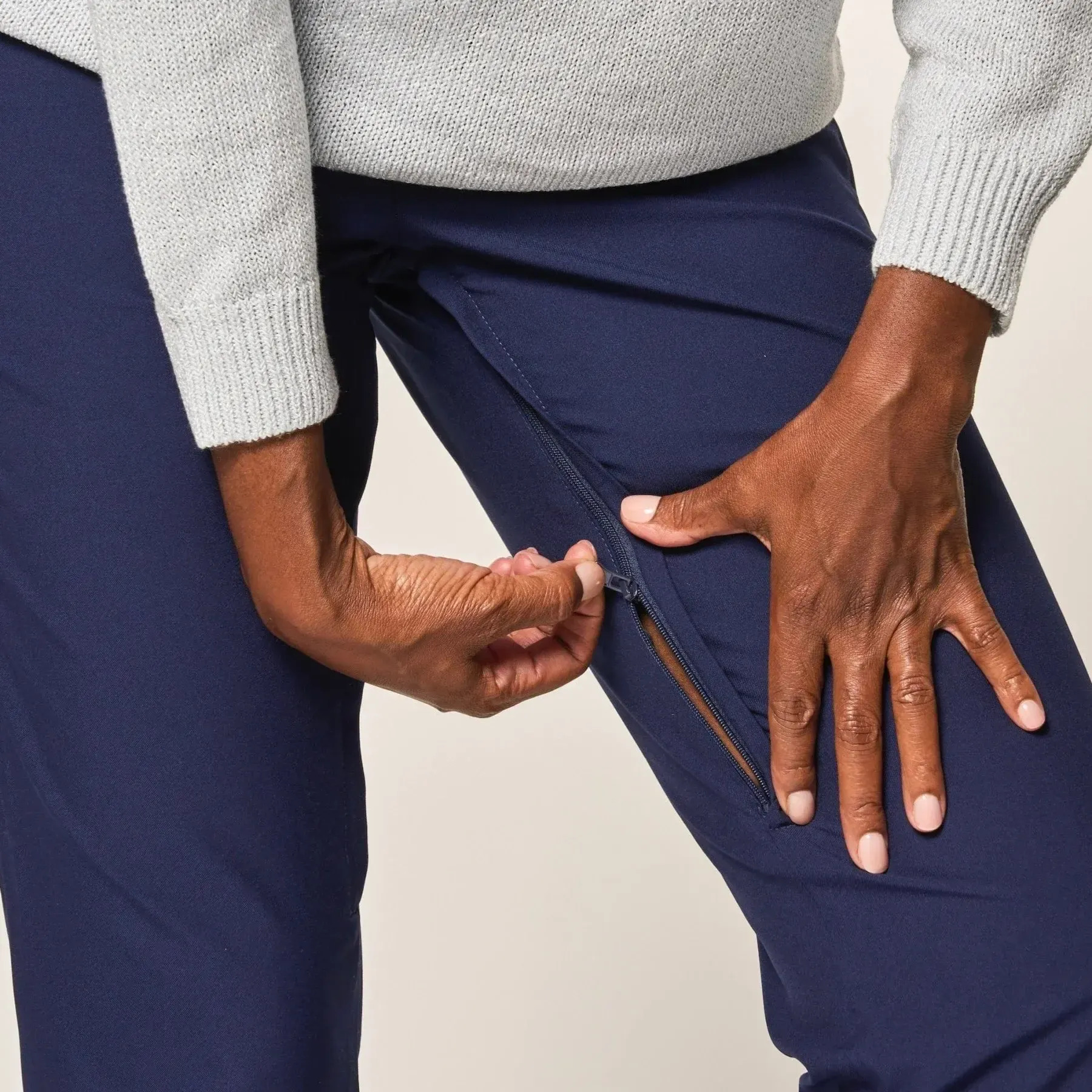
Dull ache or a sharp throbbing sensation, there are several challenges that come with arthritis or joint pain. From morning swelling to feeling your bones ‘creaking’ when you move, regular tasks become difficult with each passing day. Considering that, putting on a piece of clothing isn’t easy either.
Out of the total population afflicted with arthritis (within the country), an estimated 64% are women (Government of Canada). Other than that, it’s well known that women’s clothing is far more complicated than men’s. When both these factors are combined, getting dressed can easily be categorized as the most frustrating task of the day.
With diverse body curves, delicate fabrics, & everchanging fashion trends, what women really want with ladieswear tops is independence, comfort, & personal style. Fortunately, adaptive dressing solutions are accommodating the needs of women with limited mobility, grip, & reach with smart designs, reducing joint strain & making the experience comfortable.
How Arthritis and Joint Pain Affect Daily Dressing
Gripping & opening the hem of the shirt, bending & raising your arms, slipping it over your head, & pulling arms out of each sleeve seems like a lot of work, doesn’t it? If you think of dressing in isolation, it may not seem like a big deal. But when your mobility is restricted & your dexterity compromised, pain follows each movement.
Not to forget how intense joint inflammation can get in the morning, which makes changing clothes a 30-minute task. For this reason, a considerable population is gravitating towards adaptive clothing solutions to avoid the hassles of buttoning, zipping, & tying. These adaptive dressing solutions offer garments with front closures with magnetic or Velcro mechanisms.
4 Common Clothing Challenges Women with Arthritis Face
The satisfaction & a sense of dignity that comes with being able to look after yourself will always remain unmatched. So, it’s understandable how, despite all the struggles of suffering from arthritis & joint pain, you wouldn’t want to compromise on your independence. But the point is, regular clothing items are incompatible for women with mobility & dexterity issues.
- Tight Neck Openings: Pulling small or restrictive necklines over the head may cause painful shoulder & neck strain.
- Small Buttons and Fasteners: Zippers, clasps, & tiny buttons demand fine motor skills & gripping strength — which arthritis patients often struggle with.
- Restrictive Fabrics: Garments made with non-stretchy materials restrict joint movement, which creates friction & causes discomfort to the user.
- Heavy Layers: Thick, winter clothing items put weight on joints & increase pain with the extra bulk — something that can be solved with lightweight, adaptive thermal wear.
Features That Make Clothing Easier to Wear with Arthritis
Adapting to prevalent problems by offering practical solutions has always helped the masses. And to this, adaptive ladieswear tops have been a valuable inclusion. Instead of focusing on buttons, small zipper tabs, & restrictive fabrics, several adaptive elements are incorporated to minimize joint strain.
- Open Back Designs: Overlapping panels & split-back closures cut the need for overhead stretching & the struggle that comes with it.
- Easy Closure Systems: Magnetic buttons, large ring zippers, and hook-and-loop tapes prevent painful fine motor fastening.
- Stretchable Fabrics: Knits & elastane fabrics allow unrestricted mobility & provide gentle compression without binding.
- Loose Yet Stylish Fits: Wide sleeves, relaxed waists, & paired cuts drape beautifully over the body, giving a fashionable look without compromising on functionality.
4 Easy Dressing Techniques That Can Reduce Daily Strain
Undoubtedly, it’s difficult to dress yourself when you’re dealing with arthritis & joint pain. Imagine you’re hungry & you just want to make your favorite sandwich but because you’ve been busy putting on clothes, you get less motivated to actually get the work done. However, you can cut down on the time by making the process easy with certain techniques & strategies.
1. Preparing Clothing Before Dressing
Don’t just rush to wear clothes the moment you set your eyes on them. Instead, rummage through your drawer/closet, find the perfect one out of your collection of adaptive ladieswear tops to wear for the day, pair it with shorts or a comfy skirt, & place them on your bed.
- Lay the items in order (the sequence in which you’ll wear them).
- Position the items face down with sleeves & legs unrolled.
- Open up the zippers, Velcro tabs, & tapes to reduce fine motor working while wearing.
- Sit on a comfortable spot that provides support for your back & hips.
- Keep adaptive dressing sticks or a long-handled shoehorn in your clothes to maintain accessibility (just in case).
2. Choosing Clothing That Requires Fewer Movements
The cheat code to reducing joint pain & other symptoms of arthritis is to wear clothing that doesn’t require much movement. So, go for loose-fitting, slip-on clothing items that eliminate the need to deal with complicated fasteners or tight fabrics.
- Switch pants & skirts to elastic-waist style to avoid pinching, buttoning, or zipping.
- Choose Velcro or magnetic closures for easy utilization.
- Pick stretchy/flowy fabrics that move naturally with your body — easy to change in & out of.
- Avoid garments with back openings & restrictive designs, & go for wrap-around styles/front opening clothes for easier access.
- Replace traditional laced shoes with slip-ons featuring elastic laces, collapsible heels, or side zippers to skip the hassle of bending & tying.
3. Dressing During Times of Lower Pain
The pain springing from arthritis doesn’t always remain the same. There are periods where it intensifies, & there are times it dims down. What you need to do is strategically schedule your garment-changing routine around periods when you experience lower pain intensity.
- Always wait until your morning stiffness has subsided before changing into a new pair of ladieswear tops.
- Schedule your clothes-changing routine around the time when your pain relief medications are the most effective.
- Always dress the side (left or right) that’s affected the most by arthritis or joint pain.
- Don’t shy away from taking rest in between each movement to avoid muscle cramps.
- Avoid changing clothes while standing, as it can increase the risk of falls or new injuries — instead, use a sturdy armchair for support.
4. Using Adaptive Dressing Tools
When your body has limited mobility & your hands struggle to grip things properly, consider using adaptive dressing tools to make the process easier. These are assistive devices doing the hard work for you & requiring very limited strength from your end.
- Dressing sticks can be used to pull up pants & guide sleeves without bending.
- Button hooks are excellent to slide through buttonholes & secure the button without needing fine motor skills.
- Sock aids are extremely helpful in eliminating the need to bend over & pull at your feet.
- Long-handled shoehorns protect your hips & back by providing support to slide into your adaptive footwear.
- Zipper pulls are used to extend zipper tabs & making it easier for arthritis patients to grip them despite swollen knuckles.
Why Adaptive Ladieswear Tops Can Be Helpful for Women with Arthritis
There’s no empowerment for women without feeling the struggles of those suffering from chronic conditions. Words of affirmation alone wouldn’t solve things for them, they need ease. You need ease. More importantly, you want to preserve your independence.
A far more comfortable lifestyle is enabled by considering adaptive ladieswear tops for regular & occasional wearing. Featuring Velcro fasteners, magnetic closures, & open-back designs, these garments prevent painful gripping, twisting, or overhead reaching for women with arthritis. Through this comfort, women can embrace their personal style & glow with confidence.
Explore Easy Dressing Solutions for Elderly Women with Arthritis or Joint Pain!
Life will always throw challenges your way, but it doesn’t mean you should accept the discomfort that comes with arthritis. Since this condition is chronic, the pain only gets worse as one grows older. Taking that into consideration, it’s always better to make better clothing decisions for yourself.
With adaptive ladieswear tops, women of all ages (suffering from arthritis or joint pain) can maintain their independence & comfort without compromising their dignity. The designers who produce such clothing items don’t forget mobility or dexterity struggles, which result in:
- Independent dressing
- Simplified caregiver assistance
- Easier medical device accessibility
Kayden Design Adaptive Clothing takes pride in keeping things classy for women suffering from arthritis. Here, our team designs tops, pants, nightwear, & dresses — all from soft & breathable fabric. Restoring independence & celebrating resilience, our vision lies in making clothing functional for everyone.
Frequently Asked Questions (FAQs)
Q1. What challenges do people with arthritis face?
Individuals living with arthritis face a variety of challenges in day-to-day activities. Common struggles include chronic pain management, extreme fatigue, unpredictable disease flares, physical limitations, & dexterity issues.
Q2. What are the features of adaptive clothing?
Adaptive clothing designs feature simplified closures (magnet/Velcro/snaps), wheelchair-friendly cuts, open-back & side-zip tailoring, flat seams, and strategically placed flaps for discreet access to ostomy bags, feeding tubes, or prosthetic devices without exposing skin.
Q3. What clothes are good for arthritis?
Adaptive ladieswear tops with magnetic buttons & Velcro closures are great for individuals living with arthritis or who suffer from chronic pain, limiting their mobility.
Q4. What clothers not to wear in arthritis?
If you have arthritis, you should avoid wearing clothes made from restrictive fabrics or with complicated fasteners, as they can restrict circulation & trigger sore joints.



