

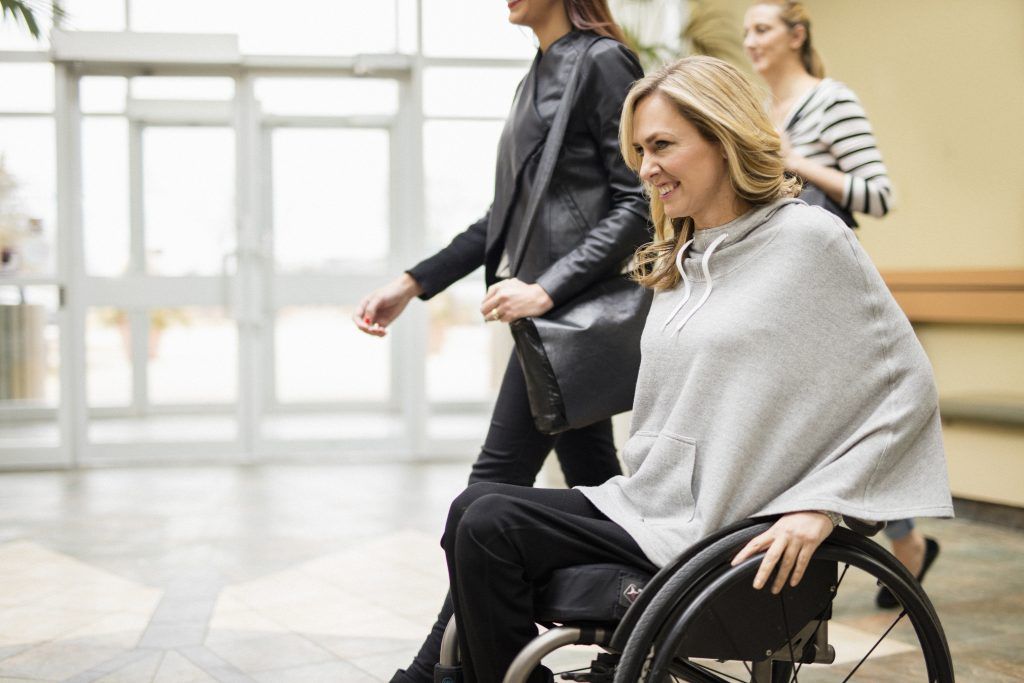
Good clothing should take one problem off your mind!
But when mobility changes, getting dressed can become a problem of its own.
Ask a woman whose mobility has changed what she wants from a top, and the answer is usually the same: it should be easy to put on, comfortable while sitting for hours, and still look like something she chose herself.
And meeting those needs depends on how a garment is designed. Kayden Design’s ladieswear tops offer a starting point for looking at the details that matter. The sections below cover:
- Fabric, fit, and length for seated wear
- Closure types and how each one performs
- Open-back construction and caregiver access
- A ten-point check to run before buying
What Makes an Adaptive Women’s Top Suitable for Daily Use?
An adaptive top suits daily use when it is easy to put on without the wearer needing to reach overhead, stays comfortable through hours of sitting, and looks like everyday clothing. Recovery garments often prioritize medical access, while an adaptive top for daily wear must combine that access with comfort and appearance.
Hospital gowns and post-surgery tops are designed around short-term care. They often open wide for treatment or examinations, while everyday appearance may take a back seat. Daily clothing has a different job: a woman who wears the same style five mornings a week needs it to survive repeated washing, sit flat under a seatbelt, and look appropriate at a grocery store or family lunch.
Kayden Design reflects this distinction in its two collections. The Classic Collection is aimed at hospital stays, surgical recovery and care routines, with back closures for care involving IV lines, physical therapy and medical exams. The Creative Collection is designed for everyday wear, with bolder prints and colours. Both use open-back construction, also called back-opening or assisted-dressing design.
Kayden Design makes its open-back styles from soft woven cotton and polyester rather than thin clinical fabric. The front looks like an everyday blouse, while the adaptive opening sits at the back.
And choosing a top means balancing comfort, accessibility, freedom of movement, appearance, and ease of dressing. A top that opens wide enough for quick access can gape when the wearer leans forward, while high-stretch fabric may lose its shape after twenty washes. So compare all five needs against the wearer’s routine rather than expecting one garment to meet every need equally well.
The wearer’s mobility should guide that choice. A woman who can move her shoulders freely and dress herself needs a different top from a woman who cannot lift her arms past chest height after a stroke or because of advanced arthritis. A woman who relies on a caregiver each morning has different needs again. Kayden Design’s site identifies open-back clothing for full-time wheelchair users and for women who can no longer raise their arms to dress.
That range of needs is why the sections below consider each feature in turn. Fabric comes first, followed by fit, closures, sleeves and back construction, then the details that matter for wheelchair users and caregivers. Assess each feature against the wearer’s daily routine; that routine helps determine which ladieswear top will work for her.
Which Fabric Features Matter in Adaptive Women’s Tops?
Fabric shapes how a top feels several hours into the day, not just in the first five minutes. Softness, breathability, stretch and lightweight construction affect comfort during wear; easy washing matters over repeated laundering.
During long periods of sitting, pressure remains on the same areas of the body, making small irritations more noticeable. A rough seam that goes unnoticed in the morning rubs against the skin over several hours. Here are 6 fabric and construction details worth checking before you buy.
- Soft woven cotton feels gentle against the skin, particularly if the wearer has thin or fragile skin.
- Breathable fabric helps heat and moisture escape during long seated stretches, reducing dampness around the back and beneath the arms.
- Light stretch makes it easier to move the shoulders and upper arms during daily activities such as eating, reaching and transfers.
- Lightweight fabric reduces pull on the shoulders, which may help a wearer with reduced upper-body strength.
- Washable fabric holds its shape through frequent laundering. Kayden Design builds its styles with facility washing in mind, using a roomier cut to allow for shrinkage from hot cycles.
- Smooth surfaces can reduce bunching where the wearer’s back meets the seat, helping the fabric lie flatter instead of forming ridges.
Cotton and polyester blends can meet several of these needs, which helps explain why they appear throughout Kayden Design’s tops collection rather than heavier, structured fabrics that can hold creases.
How Should an Adaptive Top Fit for Everyday Comfort?
An adaptive top fits well for daily wear when it allows movement without leaving excess fabric to bunch under the body. That balance becomes more noticeable when the wearer sits for long periods.
When a woman sits down, extra fabric bunches at the lower back and beneath the hips. Too little room creates the opposite problem: the top can pull across her shoulders when she reaches forward. Aim for a relaxed fit that allows movement without leaving excess fabric to gather against the body.
Here are 5 fit details that affect how ladieswear tops feel after a full day in a chair.
- A relaxed cut through the torso allows movement while limiting folds that could press into the back.
- The shoulders and upper arms need room for forward reach, since tightness there can make reaching and other daily tasks harder.
- A slightly deeper armhole can allow more reach, provided it does not gape when the arm is lowered.
- A hem that stays clear of the seat can reduce fabric gathering in the lap during transfers.
- A straight silhouette may be less likely to twist as the wearer shifts than a heavily shaped cut.
Kayden Design offers sizes XS–3XL, with chart measurements spanning a 32 to 50-inch bust, a 24 to 43-inch waist and 34 to 53-inch hips. Because waist and hip fit can change in a chair, check the top while the wearer is seated. For sizing, follow Kayden Design’s measurement instructions; if they permit seated measurements, take them in her usual seated position.
What Adaptive Closures Make Women’s Tops Easier to Put On?
Adaptive closures decide how much movement dressing demands. And 5 designs cover almost every adaptive women’s top, and each one suits a different mix of arm reach, hand strength, and assistance.
No single closure suits everyone, because the right choice depends on the wearer’s own range of motion. The 5 options below compare on the points that count day to day.
| Closure or design | How the top goes on | Suits | Point to check |
| Open-back | Drapes over the front while seated, then fastens behind | Wheelchair users, limited arm lift, caregiver-assisted dressing | Back coverage when leaning forward against a chair back |
| Velcro | Presses closed along a panel or cuff | Weak grip, arthritic hands, one-handed dressing | Hooks catch on knits and soften after repeat washing |
| Magnetic closures | Aligns and snaps shut under light pressure | Reduced fine motor control, independent dressers | Not suitable near implanted cardiac devices |
| Snap closures | Pushes together with thumb pressure | Moderate hand strength, quick caregiver changes | Snaps demand more force than magnets |
| Stretch neckline | Slips over the head with minimal pull | Good arm range, mild dexterity limits | Still requires overhead motion |
Magnetic closures warrant a safety check before purchase. The American Heart Association advises people with implanted pacemakers or defibrillators to avoid close or prolonged contact with magnets and to keep magnets at least six inches from the implant site. A magnetic front opening could fall within that distance, depending on its position and the device location. Kayden Design describes open-back construction with overlapping panels at the rear, but checks the fastener on the specific top before presenting it as a magnet-free option.
Why Are Open-Back Designs Useful for Women With Limited Mobility?
Open-back designs remove a difficult step in dressing: pulling a top over the head and down the arms. The wearer can put it on from the front and may be able to remain seated.
Kayden Design offers ladieswear tops built around this principle. The benefits depend on the wearer’s mobility and the specific top, but open-back designs make dressing easier in 5 ways:
- The wearer may not need to lift her arms overhead.
- She (the wearer) can often remain seated while dressing.
- A caregiver can access the back opening to help with dressing.
- Less pulling and twisting may ease strain on the shoulders.
- The front panel can look like a standard blouse, helping the top blend in with everyday clothing.
The collection’s red florals, aqua batik, powder blue, navy and two-tone purple options reinforce that everyday appearance and give the tops a place alongside other clothes in the wardrobe.
How Do Sleeve and Neckline Designs Affect Ease of Dressing?
Sleeve openings and necklines affect how much shoulder movement a top requires during dressing. Wider openings make dressing easier, while narrow cuffs and tight necklines add resistance.
A close-fitting sleeve can be harder to pull over the forearm, especially for someone with limited grip or sensitive skin. A snug neckline can create a similar obstacle: getting the head through may turn a simple step into a two-person task.
Here are 6 design points that makes dressing easier:
- Wider sleeves can give the arm room to pass through with less rubbing against the fabric.
- A slightly deeper armhole can give the arm more room to move into position, reducing the shoulder movement needed.
- Short and three-quarter sleeves can leave less fabric to brush against tabletops, wheels and armrests during everyday activities.
- V-necks and wide round necks allow more room for the head to pass through than a high crew neck.
- Flexible neckline fabric stretches during dressing and returns to shape afterwards.
- Tops that require overhead lifting can be difficult for women with limited shoulder movement.
As examples of the V-neck option, Kayden Design lists four styles: 1003 Marine Blue, 1004 Powder Blue, 1005 Kelly Green and 1006 Red, each currently priced at $65.
What Features Should Women Consider for Wheelchair-Friendly Tops?
Wheelchair use changes which features matter in women’s tops, because the body stays in one position and in contact with the chair for hours.
Here are the 5 features that matter most, each paired with the problem it solves once a woman sits all day.
| Clothing feature | What to look for | Why it matters when seated |
| Back and hem design | Open back with a shorter, flat hem | Stops fabric gathering behind the back or under the seat |
| Relaxed fit | Room through the torso without excess volume | Prevents pressure ridges and keeps the top from twisting |
| Breathable fabric | Woven cotton or cotton-polyester blends | Manages heat where the back meets the chair |
| Flexible construction | Light stretch through shoulders and arms | Supports pushing, reaching and transferring |
| Easy-access closure | Fastenings reachable from the front or side | Allows dressing and washroom access without standing |
Which Features Help Caregivers With Assisted Dressing?
Caregivers need access to the wearer during dressing, a quicker routine and less physical effort. Garment features that reduce lifting and pulling ease strain for the caregiver and discomfort for the wearer.
Repeated lifting can tire a spouse or care aide, while pulling the wearer’s arms may strain her shoulders. Kayden Design’s open-back styles reduce some of this effort. Here are 6 features that make assisted dressing easier:
- The open back gives the caregiver access to the wearer during dressing.
- The wearer can often remain seated while being dressed.
- The top can be put on from the front, which may make the task manageable for one caregiver.
- Simple fastenings can make each change quicker.
- Fewer small fasteners mean less fiddly work for the caregiver.
- Keeping the front covered can help preserve the wearer’s dignity during assistance.
Kayden Design also accepts custom orders for people who do not fit a standard open-back style. The wearer or caregiver can share measurements and drawings to explain what is needed, and the bespoke pieces are made in-house on Vancouver Island.
How Can Women Balance Comfort, Accessibility, and Personal Style?
Adaptive clothing does not have to look clinical. Colour, pattern, neckline and cut remain personal choices even when a top opens at the back.
That clinical image may come from older adaptive lines in plain, institutional colours. An open back still leaves room for the front of a garment to look like everyday clothing.
Kayden Design’s ladieswear tops offer examples of those style choices. The range currently lists fifteen styles, including Red Multi Floral at $69, Aqua Batik at $63 and Soft Pink at $55.
Neckline is part of personal style, too. A woman who has always worn a V-neck may not want a high round neck, and both shapes can work with open-back construction. She can choose the one she prefers while checking that the top goes on easily and feels comfortable when she is seated.
Those choices can matter especially after mobility changes. A woman who wore prints and colour before her mobility changed may miss them if her wardrobe turns plain and shapeless. Clothing she recognises as her own can support her confidence while making dressing easier.
Those preferences still have to work with her mobility. A top may have a print she likes but be difficult to put on if it requires overhead lifting. Start with the features her mobility requires, then choose among styles that meet those needs. Kayden Design’s colour and pattern range gives her choices among its open-back tops.
Adapting a favourite garment offers another way to keep her own style. And Kayden Design re-tailors clothes that local customers bring in, so they can continue wearing pieces they like rather than replacing them.
What Should You Check Before Choosing an Adaptive Women’s Top?
Run a short check before buying, because a top that suits one woman’s mobility can frustrate another each morning. These ten questions cover dressing, comfort, care and personal style.
Work through them with the wearer present wherever possible. Her judgement on comfort can tell you things a specification sheet cannot.
- Does the top match her current mobility level rather than her previous one?
- Can it go on without requiring her to lift her arms overhead?
- Is the fabric soft and breathable enough for a full day against her skin?
- Does the top allow her to reach, eat and transfer comfortably?
- Does the fit stay comfortable while she is seated?
- Can she or her caregiver operate the closures without struggling?
- Does the opening give a caregiver access to help her dress when needed?
- Will it hold up under frequent washing?
- Do the colour, pattern and neckline match what she actually likes wearing?
- Does it suit the activities she does on an ordinary day?
Before ordering, compare her measurements with the size chart. Once the top arrives, have her try it while seated and check where it pulls or gathers before removing the tags.
If she decides to keep it, follow the care instructions for the first wash and notice how it feels through a full day in the chair. Kayden Design also adapts garments that local customers bring in.
Explore Adaptive Ladieswear Tops Built for Daily Wear
Getting dressed can take enough effort already. And Kayden Design’s open-back ladieswear tops are made to go on more easily and feel comfortable through hours of sitting.
She can choose from soft cotton and polyester fabrics, relaxed cuts in sizes small through extra large, and colours she likes.
The tops currently listed cost $55 to $81. And we aim to ship orders within three days and offer returns on online purchases.
If she (the wearer) lives nearby and has a favourite garment she wants to keep wearing, she can bring it in for re-tailoring instead of replacing it.
Give her an easier start to the day. Explore Kayden Design’s ladieswear tops.
Frequently Asked Questions (FAQs)
Q1. What is the easiest type of adaptive top to put on if I can’t raise my arms?
An open-back top can be easier because you can put it on from the front without pulling it over your head. You can often stay seated while putting it on, though you may need help fastening the back.
Q2. Can I put on an adaptive women’s top by myself, or will I need help?
That depends on how much you can move your shoulders, how easily you can use your hands, and how the top fastens. For example, you may be able to put your arms into the sleeves yourself but still need help securing the back. If a standard open-back style does not work for you, Kayden Design takes custom orders.
Q3. Are magnetic closures safe if I have a pacemaker or other implanted medical device?
The American Heart Association advises keeping magnets at least six inches from where a pacemaker or implanted defibrillator sits. A magnetic front closure could sit closer than that, depending on where the closure and device are located. Check the fastenings on the specific top; an open back does not tell you whether it contains magnets. If you have another type of implant, follow the guidance for that device.
Q4. How do I wash and dry adaptive tops without damaging the closures?
Kayden Design makes its clothing with facility washing in mind and leaves room in its styles for some shrinkage. Still, check the care instructions for the specific top before washing or drying it, since fabrics vary. Secure any exposed fastenings before washing to help prevent snags.



